

Pneumatic actuators are versatile, widely used components across production lines, robot axes and transport mechanisms. They also serve in braking systems, power generation, and the wood and paper industries. Indispensable to presses, machine tools and sorters, and found daily in vehicles (tailgates, platforms) and furniture (office chairs, cabinet doors), their construction is simple and dependable, yet demands precision and consistent quality.
This article follows how these actuators are made at Pneumat, a Polish manufacturer that combines proven technology, production experience and an application-led approach to customer requirements. From technical advice, through design and manufacturing, to quality control and final shipment, each stage is executed to stringent standards and aligned with ISO 15552 and ISO 6432 for interchangeability.
We outline a six-stage workflow that underpins performance and reliability: needs analysis and specification; component completion and machining; assembly; testing and verification; packaging and logistics; and comprehensive after-sales support.
Highlights:
- Pneumat guarantees the quality and reliability of its pneumatic actuator solutions.
- The company’s portfolio includes both standard components and fully customised actuators tailored to individual project requirements.
- All manufacturing processes comply with stringent international standards for safety and performance.
- Every actuator undergoes a rigorous, multi-stage quality inspection before shipment.
- Pneumat provides a comprehensive 12-month warranty on its pneumatic actuators.
- The TME catalogue features a full selection of standard Pneumat actuators.
- TME also supports custom orders and technical consultations for specialised pneumatic solutions.
Step I. Pneumat Actuator Needs Analysis – Commercial Enquiry, Technical Consultation and Order Preparation
Every pneumatic actuator project at Pneumat begins with a detailed understanding of the customer’s application and performance requirements. This initial stage ensures that each actuator is correctly matched, or custom-engineered, to deliver optimal results within the target installation.
How enquiries are handled
The process starts with an enquiry in which the client specifies key parameters such as load, duty cycle, available installation space and required performance. Based on this data, Pneumat engineers determine whether a standard actuator can be used or if a customised solution is required.
Variant I: Selection of actuator based on catalogue type
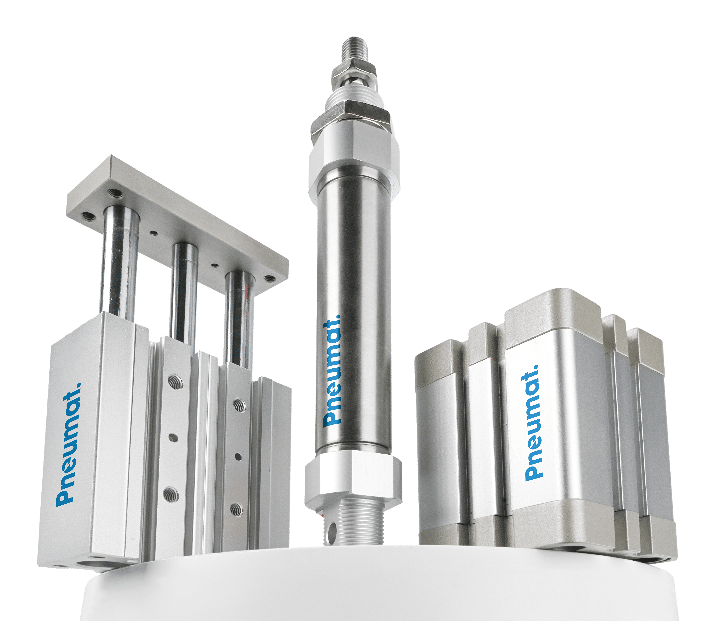
For replacement or integration into existing machinery, Pneumat’s technical advisors reference dimensional and ISO standards (e.g. ISO 15552, ISO 6432) to identify compatible actuators from stock. With an extensive database of pre-manufactured cylinders, Pneumat can quickly supply replacements without compromising mounting configuration or technical performance. The TME catalogue includes standard variants with piston strokes ranging from 5 mm to 1000 mm.
Variant II: Individual actuator specification
When a project demands specific technical criteria, Pneumat’s design engineers prepare a bespoke specification. This can include:
- Piston diameter
- Stroke length
- Type of action (single- or double-acting)
- Mounting style
- Operating environment (temperature, dust level, cycle frequency)
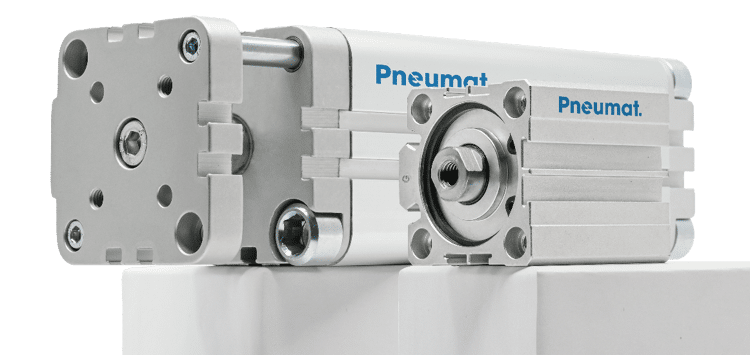
Each individual order is optimised both technically and economically. Custom-built actuators can also be ordered via TME, where dedicated specialists assist in preparation and pricing.
Approval and production handover
Once the client approves the proposed specification, the order is passed automatically to Pneumat’s production management system. From there, it moves to the assembly and machining departments, initiating the next key phase of the actuator’s manufacture.
This first step combines commercial and technical consultation with detailed engineering analysis, ensuring each pneumatic actuator aligns perfectly with its intended use before production begins.
Step II: Precision Components — Material Selection and Machining
The strength and performance of a pneumatic actuator begin long before final assembly. At Pneumat, the foundation lies in precision component manufacturing, where each profile, rod and seal is engineered to strict dimensional and surface-quality requirements. This meticulous approach ensures consistency, interchangeability and long-term durability across industrial environments.
Cutting and machining to specification
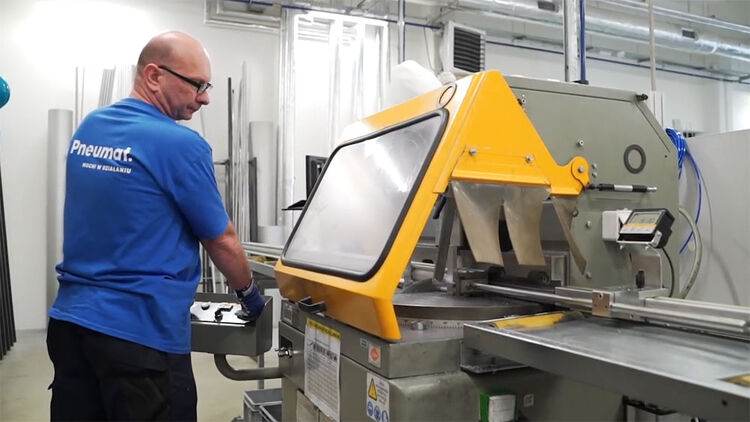
Aluminium profiles form the backbone of Pneumat’s actuator bodies. These are cut to the required lengths using high-accuracy saws before undergoing CNC machining to create mounting holes, port threads and sensor slots. The same attention is given to piston rods, which are precision-ground and threaded to match the actuator’s stroke and load specifications.

Each machining process adheres to ISO 6432 and ISO 15552 standards, ensuring that components produced in Pneumat’s facility align perfectly with those from other compliant manufacturers. This level of global compatibility allows users to replace or upgrade actuators without re-engineering entire systems.
Material selection for every environment
- Chromium-plated steel rods for general industrial use, providing strong wear and corrosion resistance.
- Stainless-steel rods for food, pharma and clean applications where hygiene and exposure require elevated material performance.
- Anodised aluminium profiles to improve corrosion resistance and deliver a smooth, durable surface finish.
Rod and rodless actuator types
Pneumat manufactures both piston rod and rodless actuators, each requiring distinct machining expertise:
- Piston rod actuators use a mechanical linkage between rod and piston; precise alignment preserves sealing integrity and efficient motion.
- Rodless actuators rely on precisely machined guides and sealing systems to transfer motion along a carriage without a projecting rod, ideal where space is limited and long strokes are required.
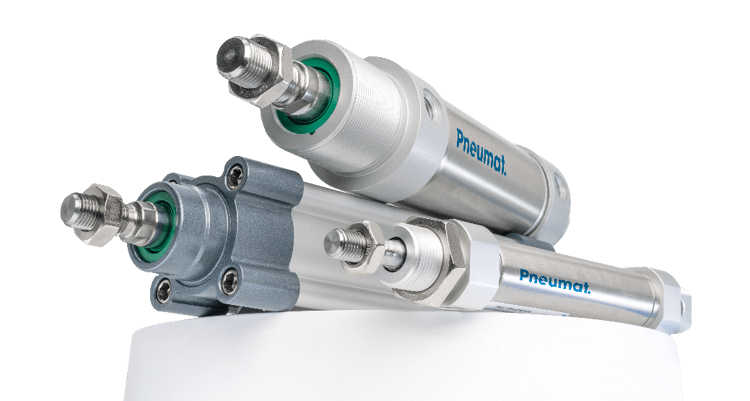
Every component emerging from Pneumat’s machining department is verified for dimensional accuracy and surface finish before it advances to surface treatment and assembly. The result is a library of standardised, ISO-compliant parts ready to perform reliably in the next phase of production.
Step III: The Art of Assembly — From Machined Parts to Working Actuators
With every component machined, inspected and prepared, the assembly phase transforms precision-engineered parts into fully operational pneumatic actuators. This stage combines the skill of trained technicians with process discipline and inspection routines that ensure each unit performs flawlessly once installed.
Manual and semi-automated assembly
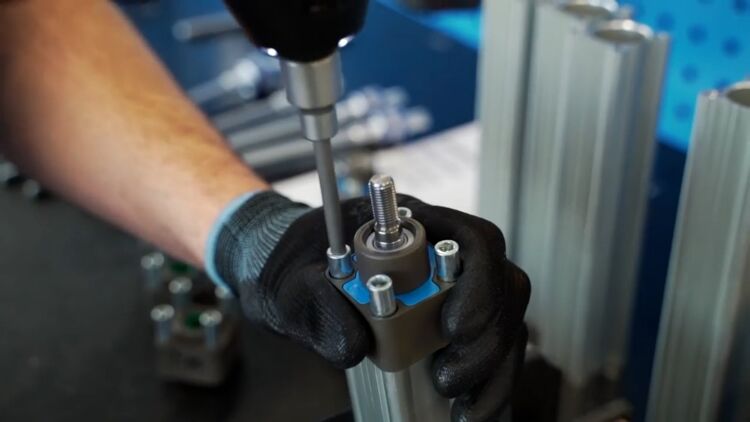
Pneumat employs both manual and semi-automated assembly stations to accommodate the wide variety of actuator configurations it offers. Technicians work from detailed production instructions generated by the company’s management system, guaranteeing that each build reflects the correct specification, stroke and mounting configuration.
Workstations are equipped with torque-controlled tools, alignment jigs and clean air supplies to prevent contamination of sealing surfaces. Components such as pistons, seals and bearings are pre-lubricated and fitted under controlled conditions to maintain consistent friction and leakage characteristics.
Sealing, bonding, and alignment techniques
- Sealing: Precision O-rings, polyurethane gaskets and PTFE-based seals are fitted to achieve airtight integrity across piston and end-cap interfaces.
- Bonding: Critical joints, such as piston-to-rod connections, are secured using anaerobic adhesives, which cure in the absence of oxygen. This creates a vibration-resistant bond that prevents microleaks and mechanical loosening during extended operation.
- Alignment: Guides and sleeves are installed using concentricity gauges to ensure that the rod travels without deviation, reducing side-load wear and extending service life.
Dimensional verification and assembly precision
At the end of each assembly station, dimensional verification confirms that overall length, stroke and mounting geometry conform to the specified tolerance band. Cylinders are measured against ISO references, guaranteeing compatibility with standard mounting accessories and sensor brackets used throughout the industry.
Assembly complexity by actuator design
The assembly process varies depending on actuator type. Piston rod actuators require precise torqueing of internal connections to maintain sealing under pressure, while rodless actuators demand more intricate alignment of internal tracks and magnetic couplers. Each variant undergoes tailored handling procedures to ensure operational integrity.
Every actuator leaves the assembly line as a complete mechanical unit, ready for the critical phase of functional testing and validation that follows.
Step IV: Testing and Quality Assurance — Meeting Industrial Standards
In pneumatic engineering, reliability is proven through testing. Before any actuator leaves Pneumat’s facility, it must pass a sequence of inspections that confirm every parameter, from dimensional accuracy to pressure integrity, meets the company’s stringent standards and international specifications.
Multi-stage inspection process
Each actuator is subject to a structured inspection routine designed to validate both mechanical and functional quality. The process includes:
- Dimensional checks against ISO 15552 and ISO 6432 specifications, ensuring mounting interfaces and stroke lengths meet standard tolerances.
- Visual inspection for mechanical defects, surface irregularities or contamination that could impair performance.
- Functional testing of smooth motion, piston retraction and sensor feedback response.
- Pressure and leak testing to verify airtight integrity under operational load.
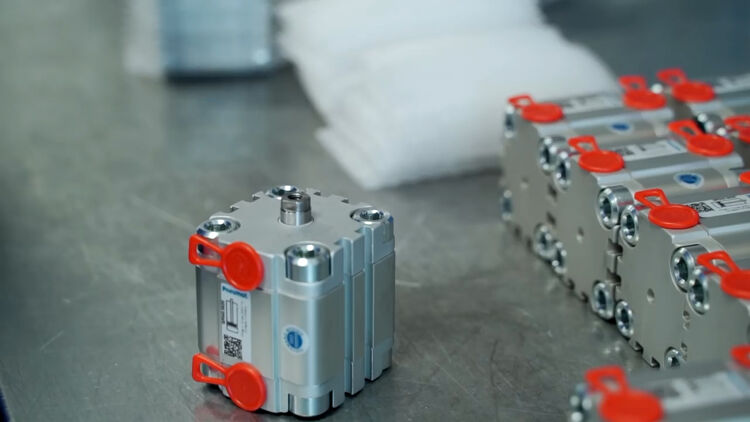
Air-pressure and immersion leak testing
Leak testing forms the core of Pneumat’s quality verification. Each actuator is connected to a compressed-air system that subjects it to full working pressure. The device is tested in both extended and retracted positions, with any pressure drop monitored electronically to detect even minute leaks.
When anomalies are detected, the actuator undergoes a secondary immersion test, submerged in a water bath while pressurised. Escaping air forms visible bubbles, allowing technicians to locate micro-leaks or improper seal seating with pinpoint precision. Faults are corrected immediately, and the product is re-tested to confirm compliance before release.
Standards-driven reliability
Pneumat’s adherence to global ISO standards is more than a formality; it’s a guarantee of cross-industry reliability. The same actuator models that pass these tests are deployed across automotive production lines, packaging machinery, food processing plants and robotics platforms worldwide.
Each verified actuator receives a compliance label and unique traceability code, linking it to its production batch, test data and final inspection record. This digital documentation ensures full accountability and enables rapid diagnostics in case of field service requests.
Performance verification in automation systems
Reliable actuation is the backbone of industrial automation. By maintaining consistency in build and verification, Pneumat ensures its actuators integrate seamlessly with sensors, controllers and safety systems. Every verified cylinder represents a unit of performance that automation engineers can trust to operate continuously under demanding conditions.
Once validated, the actuator advances to final packaging and logistics, where equal care is taken to preserve the product’s integrity during transport.
Step V: Packaging and Logistics — Safeguarding Precision
Even the most precisely engineered component must reach its destination in perfect condition. Pneumat’s packaging and logistics process ensures every actuator, whether a single replacement unit or a bulk industrial order, is prepared, protected and delivered according to international standards of quality and traceability.
Protective packaging for every actuator
After passing final inspection, each pneumatic actuator is transferred to the packing area, where it undergoes a series of steps designed to protect delicate surfaces and sealing elements. Actuators are enclosed in protective mesh sleeves to prevent scratching and abrasion during handling. Depending on the size and type, they may be further wrapped in anti-static film or bubble protection for added cushioning.
Each package receives a barcode label containing model identification, serial or batch number, and quality-control verification data. This traceable identification system enables real-time monitoring of products through internal logistics and external freight tracking systems.
Warehouse handling and documentation
- Quality-checked storage: Finished actuators are placed in climate-controlled zones to prevent condensation or corrosion before shipment.
- Documentation inclusion: Every parcel contains an invoice, technical data sheet, installation guidelines and, where applicable, certificates of conformity or test results.
- Accessory packaging: Any additional mounting hardware, fittings or sensors requested by the customer are packed with the corresponding actuator to simplify installation on arrival.
Logistics consistency and global delivery
Pneumat’s logistics department coordinates both domestic and international shipments, adhering to globally recognised standards for industrial product packaging and pneumatic actuator logistics. Packaging specifications are optimised for freight consolidation and palletisation, reducing transport costs while maintaining high protection standards.
Actuators destined for overseas clients are boxed in reinforced cartons with moisture-resistant linings and marked with handling indicators to ensure safe transit. Each consignment is verified through Pneumat’s warehouse management system, providing end-to-end visibility and confirming the integrity of every order.
Preserving quality from factory to field
This stage completes the physical journey of each Pneumat actuator from production floor to customer facility. The same care applied to its engineering is mirrored in how it is packaged, shipped and documented, maintaining the manufacturer’s reputation for precision, reliability and professionalism long after it leaves the assembly line.
Step VI: After-Sales Support and Warranty — Building Trust Through Reliability
The final stage in Pneumat’s production journey extends beyond manufacturing and delivery. It focuses on ensuring that customers continue to receive value, reliability and technical confidence throughout the product’s lifecycle. This commitment is embodied in Pneumat’s comprehensive after-sales support and warranty programme, designed to maintain operational uptime and reinforce long-term trust.
Comprehensive warranty and technical assurance
Every Pneumat actuator is supplied with a 12-month warranty covering material defects and manufacturing errors, effective from the date of purchase. The warranty reflects the company’s confidence in its production standards and quality-control procedures. It ensures that clients investing in Pneumat actuators can rely on consistent performance under the specified operating conditions.
Beyond simple warranty coverage, Pneumat’s customer support team provides ongoing guidance for installation, operation and maintenance, helping engineers get the most from each unit. Whether troubleshooting air system irregularities or selecting compatible accessories, the brand’s specialists deliver actionable advice that minimises downtime.
Service, maintenance, and customer education
- Transparent warranty process: Claims are handled efficiently through digital documentation and batch tracking, ensuring rapid verification and replacement if required.
- Maintenance guidance: Pneumat publishes clear service intervals and inspection tips for seal replacement, lubrication and alignment checks, extending actuator life and reliability.
- Training and consultation: Technical advisors support distributors and integrators with up-to-date product knowledge, system design assistance and on-site implementation advice.
Trust built through reliability
Pneumat’s after-sales strategy is rooted in accountability and partnership. By combining responsive technical support with transparent warranty coverage, the company nurtures confidence among OEMs, automation engineers and system integrators. This proactive approach transforms a one-time sale into a sustained relationship built on trust, reliability and mutual growth.
A long-term partner in automation solutions
Pneumat’s dedication to post-sale service positions it not only as a component supplier but as a partner in long-term system performance. Whether replacing individual actuators or designing complete pneumatic assemblies, customers benefit from consistent quality assurance, reliable technical support and continued collaboration throughout the product lifecycle.
With engineering precision, verified performance and dependable after-sales care, Pneumat exemplifies the modern standard for industrial actuation, built to perform, supported to last.
Conclusion
From the first consultation to final delivery, Pneumat’s six-step manufacturing process represents a blueprint for precision engineering in the European automation sector. Every stage, from specification and machining to testing, packaging and after-sales care, demonstrates how a disciplined, standardised approach can produce pneumatic actuators that consistently meet the demands of global industry.
This dedication to process control and ISO compliance not only ensures interchangeability and reliability but also supports broader trends shaping modern manufacturing. As factories evolve towards sustainability, automation and predictive maintenance, Pneumat’s quality-driven methodology shows how established industrial components can continue to advance alongside digital transformation and smart manufacturing practices.
Through continuous refinement of materials, machining accuracy and testing technology, Pneumat stands as a model of adaptability, maintaining the craftsmanship of traditional engineering while embracing the efficiency of modern production systems. Its actuators power robotics, automation lines and precision tools across multiple sectors, embodying both performance and longevity.
To explore the full range of Pneumat pneumatic actuators or to discuss a tailored solution for your automation project, visit the TME catalogue or contact Pneumat’s technical advisory team for expert guidance.
Pneumat pneumatic actuators