CASE STUDY
A solid, light-weight device built for heavy-duty tracking – Abeeway, a customer success story.
The Multi-Mode Ruggedized Tracker That Never Loses Sight
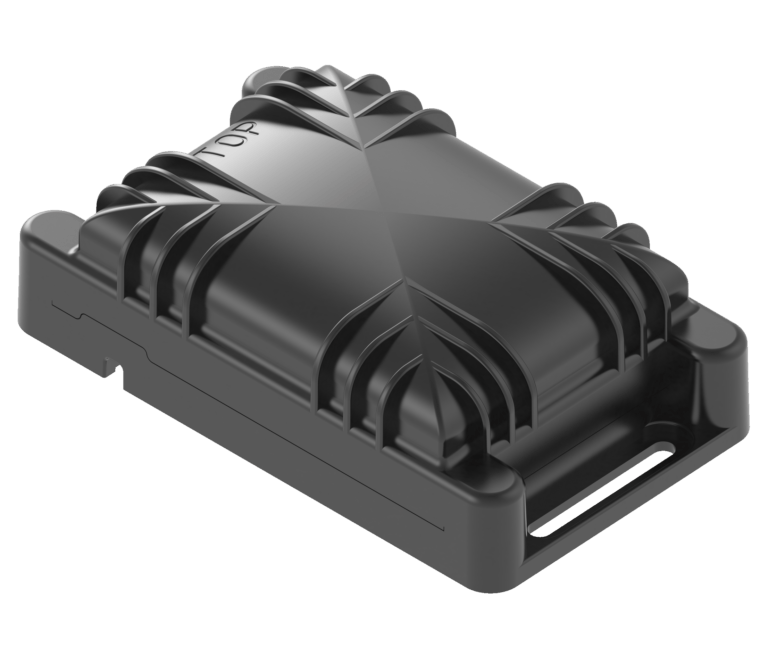
Abeeway is a leading provider of multi-technology, low-power geolocation solutions for the Internet of Things (IoT). Formerly a subsidiary of Actility and now part of the Netmore Group, the company is recognized as a market leader in battery-powered indoor and outdoor tracking. Their devices combine Cellular, GPS, Wi-Fi, Bluetooth, and LoRaWAN? technologies to deliver accurate and continuous asset visibility across diverse environments. Designed for ultra-low power consumption, their solutions ensure extended battery life while maintaining reliable performance. They serve a wide range of industries, including logistics, transportation, construction, and industrial sectors, providing solutions for asset management, supply chain visibility, and workforce safety.
Abeeway’s goal is to develop a new Ruggedized, light-weight compact tracker for heavy duty tracking that achieves high precision positioning due to its multi-mode device with embedded sensors combining Cellular, GPS, Low-power GPS, Wi-Fi Sniffer, BLE and LoRa geolocation technology. This device is required to be ATEX Certified.
The primary challenge in bringing this type of tracker to market is the fundamental difficulty of having a compact size, the need for robust, the multi-technology integration with GPS, LoRa, Wi-Fi, BLE, LTE-M/NB-IoT in the same device while maintaining high performance.
The tough, protective casing, while essential for harsh environments, also weakens radio signals, creating a significant obstacle for reliable communication. This makes it extremely difficult to effectively integrate and fine-tune multiple antennas within such a small space.
All the components integrated in the PCB along with the high precision requirements also create a substantial demand for power, making it a major engineering hurdle to achieve the desired long battery life, even with a high-capacity battery design.
Finally, the small PCB makes simultaneous coverage of all global frequency bands very complicated, requiring a design compromise that relies on a switching mechanism between technologies (LoRa and cellular modules).

In order for this device to work, several active and passive RF components are needed. From antennas to modules, batteries, SuperCaps, switches, etc.
This is where KYOCERA AVX and Sequans expertise was required. KYOCERA AVX’s top-tier engineering and testing support, gave the trust to Abeeway to pursue this product development together, which ensured a successful design. Sequans specialization in wireless 4G/5G cellular technology for the Internet of Things (IoT) and its comprehensive portfolio, including LTE-M/NB-IoT, 4G LTE Cat 1bis, and 5G NR RedCap/eRedCap platforms, tailored the solution for the innovative multi-mode tracker of Abeeway.

1. Antenna solution proposed
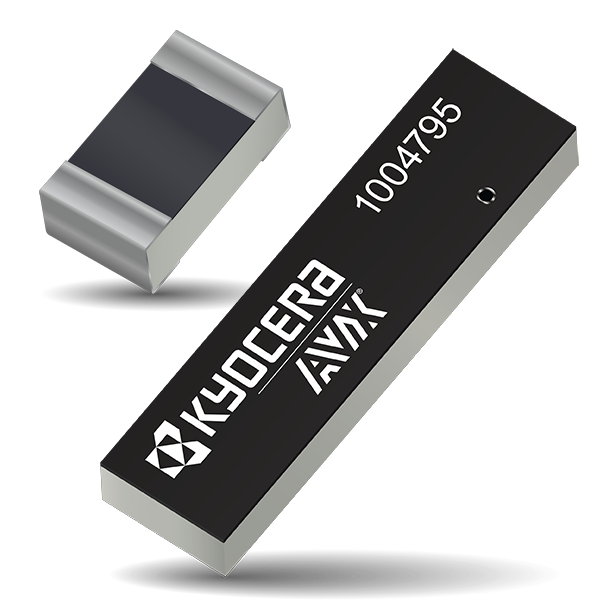
This device covers LTE-M/NB-IoT, LoRa, GPS and BT/Wi-Fi technologies at the same time which require at least 4 antennas. Instead of integrating 2 different antennas into this small device, KYOCERA AVX engineering team worked on a solution that combines LTE and LoRa. This solution not only reduces the size on the PCB but also reduces the coupling risk between the antennas and reduces the cost of the device when buying only one antenna for dual functionalities. The 1004795 embedded antenna can achieve high performance in a small form factor with reduced ground plane making it ideal for this type of device.
The second antenna integrated into this device is the 1001312 covering Wi-Fi/BT 2.4 GHz. Its small 2.0 x 1.2 x 0.55 mm size constitutes its biggest advantage of its implementation in any design. With an average of 68% efficiency in such a small footprint, this antenna fits perfectly in this tracker.
In antennas especially, every change to the PCB can affect the antenna/device performance, which is why it was very important to have the support of KYOCERA AVX in this regard. “Whenever some changes are done to the PCB, despite how often it may be” Stéphane Boudaud, R&D Senior Director of Engineering at Abeeway quoted ”we could just drop off the device for some tunning, matching or optimization and we’d always receive the best support in the best lead times, which helped to build this relationship and solution together with KYOCERA AVX”.
2. Module integration
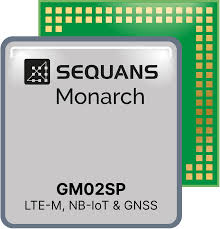
Cellular solutions represent the most complex RF component in the system due to their sophisticated system architecture, multiple band management, mobility support, strong security requirement, and the need to comply with multiple carrier and regulatory specifications and certification criteria while offering low power support. By selecting Sequans for the cellular part of this tracker, this allowed to have a direct implication of the chipset manufacturer, enabling the delivery of its best-in-class solution in a pre-integrated module: the Monarch GM02S – a cutting edge dual-mode LTE-M/NB-IoT module aggressively optimized for ultra-low power (1 uA deep sleep), in a small LGA package (16.3mm x 17mm). In addition, Sequans Monarch GM02S module is compatible with a large number of KYOCERA AVX standard antennas.
Moreover, Sequans contributed its expertise to Abeeway during the tracker’s hardware design phase, to ensure optimal RF performance in conducted mode, minimizing path loss between the module’s RF output and the antenna.
3. Supercapacitors
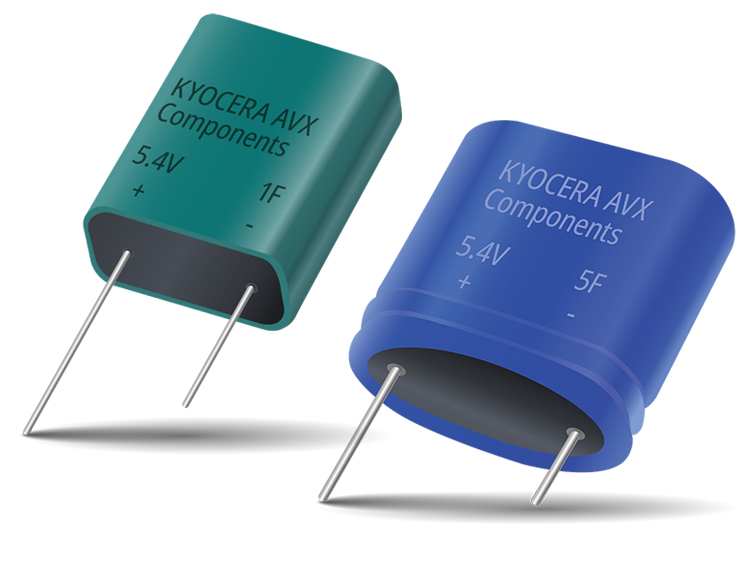
To ensure reliable performance in demanding, real‑world tracking scenarios, the Abeeway Compact Tracker incorporates KYOCERA AVX SCMQ14D474MRBB0 supercapacitors as a key element of its power architecture. These supercapacitors are specifically designed to manage short, high‑energy consumption peaks that occur during wireless data transmission, such as GNSS position acquisition and network uplinks. By absorbing and delivering burst power precisely when it is needed, the supercapacitors reduce instantaneous load on the primary battery, preventing voltage drops and minimizing battery stress.
This intelligent energy buffering approach enables the Abeeway Compact Tracker to operate more efficiently across a wide range of use cases, including asset tracking, logistics, and remote monitoring applications where consistent performance and long service life are critical. By offloading peak power demands from the battery, the supercapacitors help preserve battery health over time, resulting in extended operational lifetime, fewer maintenance interventions, and a lower total cost of ownership. Ultimately, the integration of KYOCERA AVX supercapacitor technology plays a crucial role in delivering the long‑lasting reliability and robustness required for large‑scale IoT deployments.
Results
During the deployment, the Combo LoRa/LTE tracker dynamically selected the most appropriate network based on energy consumption, network availability, and message criticality.
In areas covered by LoRa, the tracker primarily used LoRa transmissions, enabling frequent event-based messaging with minimal impact on battery life. Cellular LTE communication was automatically used as a fallback when LoRa was unavailable or when higher data volumes were required, such as for periodic reports or critical events.
This hybrid communication strategy resulted in improved battery autonomy while maintaining reliable data delivery across heterogeneous network conditions, demonstrating the robustness and efficiency of the tracker in real-world operation.
Powered by three replaceable 2.7 Ah AA batteries, its long lifespan allows it to operate for up to 7 years using one Wi-Fi scan per hour.
This case study illustrates the successful implementation of a hybrid LoRa/LTE tracker through close collaboration among Abeeway, KYOCERA AVX and Sequans.
References/Datasheet:
Contact:
Empowering Wireless Connectivity
Discover Our Leading Antenna Solutions
LATEST ANTENNA NEWS


Contact our Technical Team.
Company Newsletter